So, having finally remembered how to use my machine, I decided to bite the bullet and try my hand at making an item of clothing. First decision was what to make. I have a stash of patterns I’ve collected from sewing magazines but I’ve never tried making any of them. Most of them are dresses and I decided I wasn’t quite ready to tackle zips or anything yet. Plus I really wanted to make something with what I had on hand.
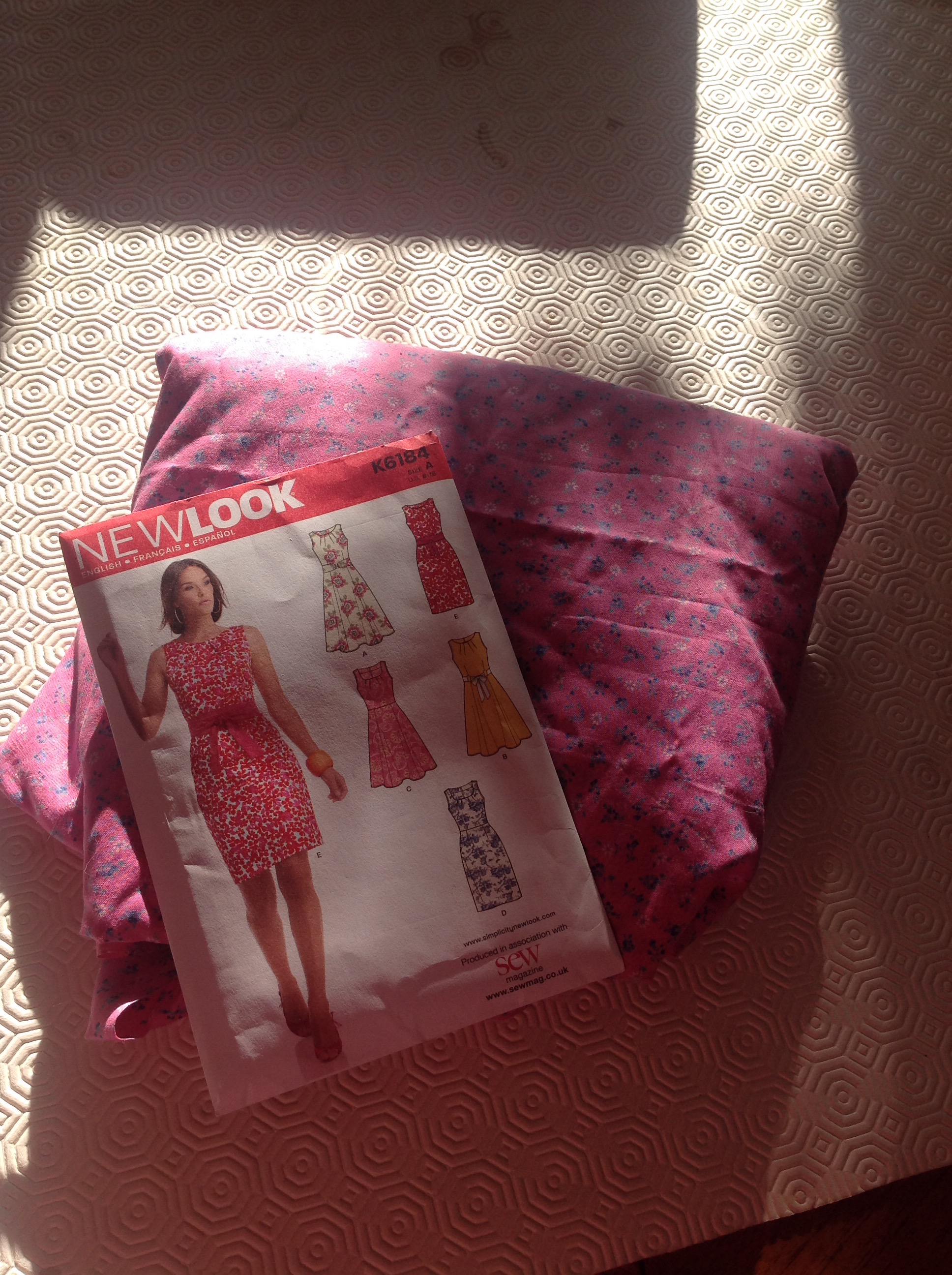
So I dug this out:
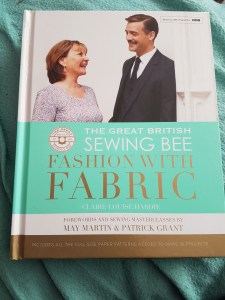
I was given this as part of my Christmas present a few years ago (thanks Mum and Dad), but had never done more than flick through it and imagine what I could make. After looking at the different projects, I decided to start at the beginning – the Sleeveless Shell Top. I figured it would be a good piece to start with as it included:
- Only four pattern pieces
- A simple button/loop fastening at the back
- No sleeves to worry about
- No bias binding – the neckline and armholes are finished with the facing
Seemed all good. Then I got the pattern sheet out… I mean – what on earth is this?!?
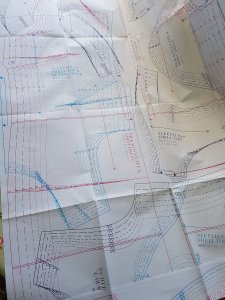
Terrifying! It looks more like a blue print for a house or something.
Once I’d calmed down from my initial panic, I figured out which bits I needed and got tracing. After looking at the measurements I decided I needed to combine two sizes, so read May’s instructions on how to do that (which I think I managed ok).
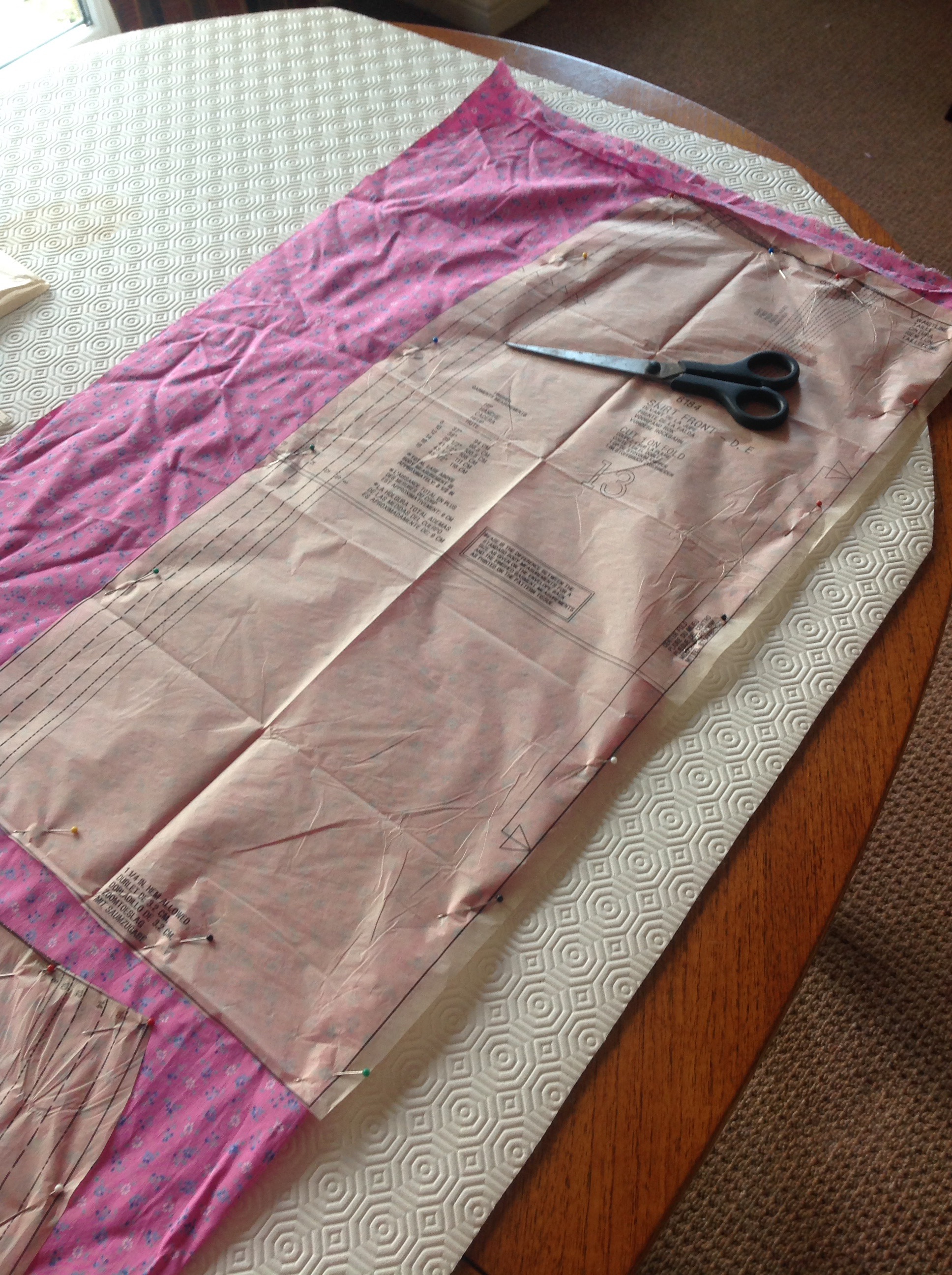
Pattern ready to go, I got my fabric out. Unfortunately, I didn’t have enough of the fabric I’d hoped to use, but I had a back up ready. Until I had two metres of fabric out on my kitchen table, I thought it was a decent size. Turns out oval tables aren’t ideal for laying out and pinning patterns, but I got there in the end (yes I could have used the floor, but this one would have tried to “help”…).
Anyway, I got everything cut out ready to start. Thanks to my Sewing Guru (aka Mum), I knew how to transfer notches and to use tailors tacks for darts, so that bit wasn’t too daunting. I was ready to start!
At this point I should make it clear that it took around three days for me to get to this stage, making sure I’d cut everything out properly and that I’d got the grainline straight etc. It then took another couple of days before I was brave enough to remove the pattern paper and actually start sewing…


First job: staystitching the neckline. I’d never done this before, but it was fairly straightforward so no problems here. Then came the interfacing…
This should have been simple, especially as I’ve used interfacing before, but could I remember what I’d done? No…
Do I cut it to shape then attach? Or do I fuse the pattern pieces to the interfacing, then trim around them? I couldn’t for the life of me remember and a phonecall to the Sewing Guru wasn’t masses of help (“I think you can do it either way”). In the end, I cut the interfacing nearly to size with the pattern pieces, then trimmed once I’d fused everything together. Seemed to work ok, but any suggestions welcome. At least I didn’t get anything stuck on the iron (which I was worried about, to be honest).
Next up was darts. I felt more confident with these. I’ve done them a couple of times now, even if I’ve not finished the items they were part of. After that was shoulder seams, on both the outer top and the facing. Again, relatively simple – short, straight seams with straight stitch. Nothing to worry about there.
Then came the instruction “neaten the seams”. Not done this before but, following a quick check of the book, I now know how to do this. I used the zig-zag stitch option, with mixed results. I think I need to practice using my zig-zag stitch much more as I haven’t quite got the hang of it or of how close to go to the edge. It was fine to start off with but then I couldn’t quite get the tension right on later seams, even after a Skype conflab with the Sewing Guru.
Once I’d neatened the shoulder seams and the edges of the facing, it was time to attach the facing to the top at the neckline. I managed this without too many problems and wasn’t too fazed by clipping the seam allowance so it all sat flat.
Then came another new term – understitching. This turned out to be quite tricky – not helped by my thread running out partway along a seam that was going perfectly. But I got there in the end – thank heavens for quick unpickers.
After attaching the loop, it was time to attach the facing at the armhole and centre back. Again not too complicated, so I managed this without too much trouble. But then came the big moment – turning the facing through.
This would be when the top would really start to take shape. At this point, the diagrams in the book were more helpful than the instructions. I didn’t have a safety pin to hand but managed without too much trouble. I actually had something that looked like a top!
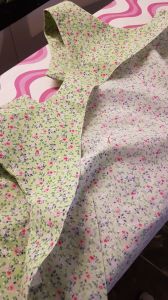
At this point, it was relatively smooth sailing. Two straight side seams and one straight seam down the back. Pinning this properly was the biggest challenge. I was paranoid about my notches and seams not matching up so I put a pit either side of those to stop them shifting, then eased the rest of the seams together. Other than the seam neatening issue I mentioned above, sewing these seams wasn’t too much trouble.
In the book, it says to machine stitch the hem, but with the issues I’m having with zig-zagging I’ve decided to hem by hand. I’m more confident doing it that way and I know I can do a good job (if a slow one).
So there it is – a finished top (well nearly)! I don’t think it looks too bad. What do you guys think?
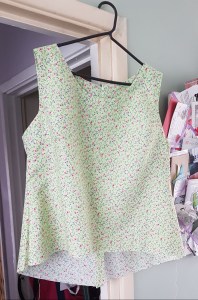
I’m partway round on the hem and have a button to sew on, but I was so proud of it, I couldn’t wait to share.
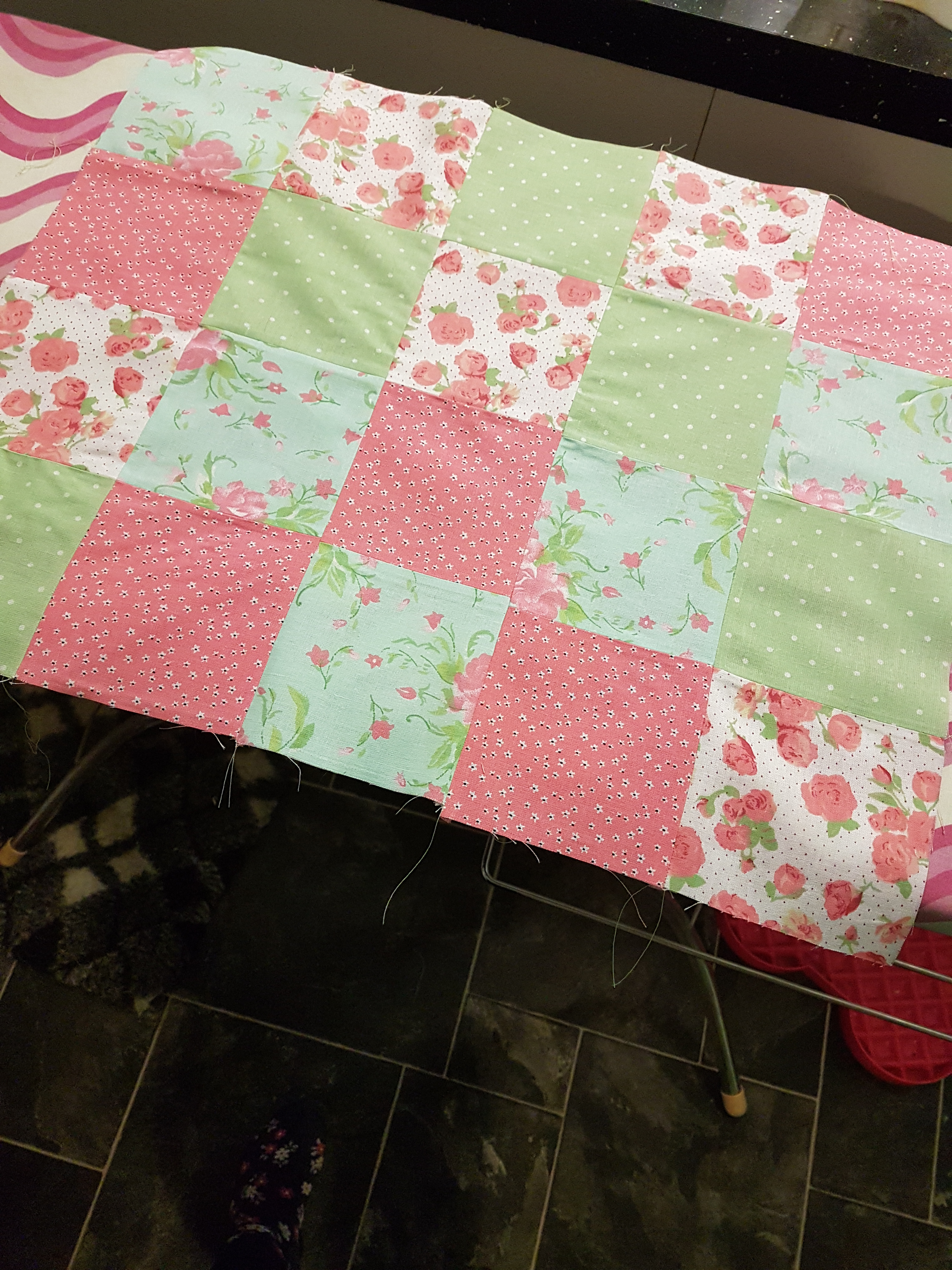
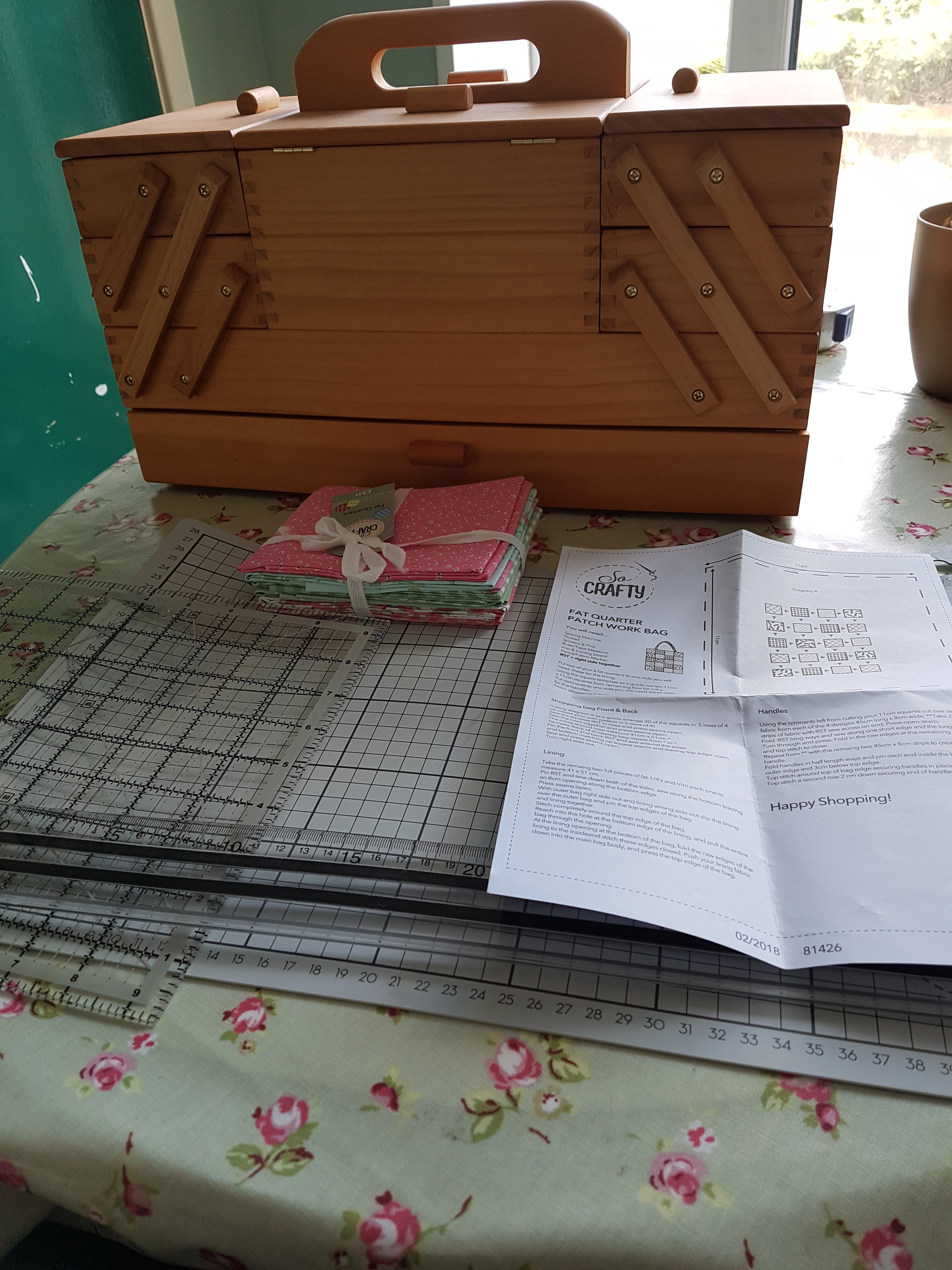 After sifting through various patterns (almost all of them acquired through sewing magazines), I came across a pack of fat quarters I’d picked up from Aldi at some point in the past. Included in the set was instructions for making a patchwork tote bag, complete with lining. Stitching all the squares together would give me plenty of opportunity to practice with my machine again and I had everything I needed to get started. Perfect!




 Stitches 'n' Scribbles