I did it! My first top!

So, having finally remembered how to use my machine, I decided to bite the bullet and try my hand at making an item of clothing. First decision was what to make. I have a stash of patterns I’ve collected from sewing magazines but I’ve never tried making any of them. Most of them are dresses and I decided I wasn’t quite ready to tackle zips or anything yet. Plus I really wanted to make something with what I had on hand.

So I dug this out:
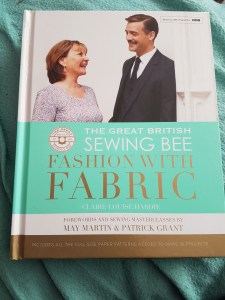
20200506_134221.jpg

I was given this as part of my Christmas present a few years ago (thanks Mum and Dad), but had never done more than flick through it and imagine what I could make. After looking at the different projects, I decided to start at the beginning – the Sleeveless Shell Top. I figured it would be a good piece to start with as it included:

  • Only four pattern pieces
  • A simple button/loop fastening at the back
  • No sleeves to worry about
  • No bias binding – the neckline and armholes are finished with the facing

Seemed all good. Then I got the pattern sheet out… I mean – what on earth is this?!?
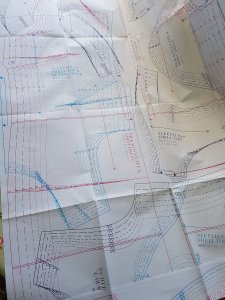
20200414_1536495822877829003077868.jpg

Terrifying! It looks more like a blue print for a house or something.

Once I’d calmed down from my initial panic, I figured out which bits I needed and got tracing. After looking at the measurements I decided I needed to combine two sizes, so read May’s instructions on how to do that (which I think I managed ok).

Pattern ready to go, I got my fabric out. Unfortunately, I didn’t have enough of the fabric I’d hoped to use, but I had a back up ready. Until I had two metres of fabric out on my kitchen table, I thought it was a decent size. Turns out oval tables aren’t ideal for laying out and pinning patterns, but I got there in the end (yes I could have used the floor, but this one would have tried to “help”…).
20200421_1923423162555236589385297.jpg

Anyway, I got everything cut out ready to start. Thanks to my Sewing Guru (aka Mum), I knew how to transfer notches and to use tailors tacks for darts, so that bit wasn’t too daunting. I was ready to start!

At this point I should make it clear that it took around three days for me to get to this stage, making sure I’d cut everything out properly and that I’d got the grainline straight etc. It then took another couple of days before I was brave enough to remove the pattern paper and actually start sewing…


First job: staystitching the neckline. I’d never done this before, but it was fairly straightforward so no problems here. Then came the interfacing…

This should have been simple, especially as I’ve used interfacing before, but could I remember what I’d done? No…

Do I cut it to shape then attach? Or do I fuse the pattern pieces to the interfacing, then trim around them? I couldn’t for the life of me remember and a phonecall to the Sewing Guru wasn’t masses of help (“I think you can do it either way”). In the end, I cut the interfacing nearly to size with the pattern pieces, then trimmed once I’d fused everything together. Seemed to work ok, but any suggestions welcome. At least I didn’t get anything stuck on the iron (which I was worried about, to be honest).

Next up was darts. I felt more confident with these. I’ve done them a couple of times now, even if I’ve not finished the items they were part of. After that was shoulder seams, on both the outer top and the facing. Again, relatively simple – short, straight seams with straight stitch. Nothing to worry about there.

Then came the instruction “neaten the seams”. Not done this before but, following a quick check of the book, I now know how to do this. I used the zig-zag stitch option, with mixed results. I think I need to practice using my zig-zag stitch much more as I haven’t quite got the hang of it or of how close to go to the edge. It was fine to start off with but then I couldn’t quite get the tension right on later seams, even after a Skype conflab with the Sewing Guru.

Once I’d neatened the shoulder seams and the edges of the facing, it was time to attach the facing to the top at the neckline. I managed this without too many problems and wasn’t too fazed by clipping the seam allowance so it all sat flat.

Then came another new term – understitching. This turned out to be quite tricky – not helped by my thread running out partway along a seam that was going perfectly. But I got there in the end – thank heavens for quick unpickers.

After attaching the loop, it was time to attach the facing at the armhole and centre back. Again not too complicated, so I managed this without too much trouble. But then came the big moment – turning the facing through.

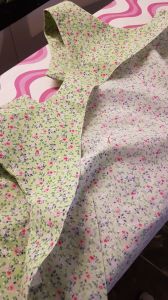
This would be when the top would really start to take shape. At this point, the diagrams in the book were more helpful than the instructions. I didn’t have a safety pin to hand but managed without too much trouble. I actually had something that looked like a top!
IMG-20200429-WA0006.jpeg

At this point, it was relatively smooth sailing. Two straight side seams and one straight seam down the back. Pinning this properly was the biggest challenge. I was paranoid about my notches and seams not matching up so I put a pit either side of those to stop them shifting, then eased the rest of the seams together. Other than the seam neatening issue I mentioned above, sewing these seams wasn’t too much trouble.

In the book, it says to machine stitch the hem, but with the issues I’m having with zig-zagging I’ve decided to hem by hand. I’m more confident doing it that way and I know I can do a good job (if a slow one).

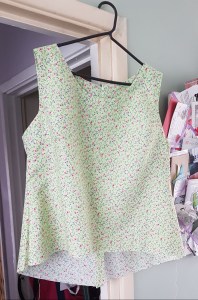
So there it is – a finished top (well nearly)! I don’t think it looks too bad. What do you guys think?
My finished top.

I’m partway round on the hem and have a button to sew on, but I was so proud of it, I couldn’t wait to share.
Sewing Sixties-Style

Last week real life took over a bit, so my review of international week on the sewing bee didn’t really happen. Sorry everyone. But I’m back on track now, so it’s time for Sixties week – sadly without Josh. This year’s sewing bee is now ladies only.

Is anyone else excited by the idea of sewing Sixties-style? There are so many iconic styles from that decade – I can’t wait to see what’s in store for the sewers.

They seem to be looking forward to it as well – although they don’t seem so thrilled at the idea of 1960s sewing machines.

First up is colour-block shift dresses. How on earth can there be 14 pieces in such a simple dress? I recognise the style of dress but I always assumed the blocks were printed rather than it being such a patchwork dress. Obviously I was wrong.

Joyce appears to have learnt her lesson after last week and is following the pattern to the letter. She does seem to have an advantage here having used those machines before, and she seems determined to prove she can follow a pattern exactly.

Personally I really liked Jade’s monochrome block dress. I can see the other colour combinations are striking but just not really my taste. I kind of like Rumana’s pastel blocks as well (anyone who’s seen my house will tell you I like pastels), but I’d have gone with something other than orange.

Am I the only one who loves the little historical snippets each week. I knew a little bit about Sixties fashion from art at school, but I really enjoyed learning more about the Mondrian dress and how it became so widespread. I’m sure there are some lessons for modern-day marketers in there.

The precision demanded of the sewersat this stage is just unreal. I know it’s a competition but I never want to be in a position where anyone is judging my sewing with a ruler.

Incidentally, is anyone else slightly confused by Esme’s outfit this week? It’s very individual but really?

Back to the challenge… A few people seem to have been caught out by the the need for precision here. Jade, Tracey and Rumana all got pulled up on using the wrong colour top stitching. Add to that the trouble people had with that zip and there’s a few in trouble here.

Patchwork patterns done with, we move on to alterations. This week we have PVC raincoats. Well why not?!? Why would anyone want to wear PVC clothing? Friends who have worn PVC (you know who you are), is it as uncomfortable as it looks?

They’re starting to get more daring now with the alterations. Admittedly, working with see through plastic makes anything seem daring, but there’s certainly a lot more variation in what they come up with.

I like Tracey’s target pockets idea, I’ve not seen anything like that before. Having said that, I can see what Esme means about the shape of the dress, but then Tracey doesn’t really seem to do anything fitted. That might trip her up soon if she’s not careful.

Joyce is having a really good week. Top of the pattern challenge and again with her alteration. She’s obviously in her element this week.

This week’s made to measure challenge is jackets. Not just any jackets – they have to use vintage 60s patterns. 

My personal favourite is Charlotte’s Jackie Kennedy-inspired jacket – such a classic shape. Angeline’s orange monstrosity on the other hand… Ok, orange is possibly my least favourite colour so I was never going to love this one, but adding Paisley and faux fur to that? Psychedelic is the right word!

I like the look of Jade’s jacket as well. Not fabric I’d have personally chosen but it’s a lovely style and if she does it well it could be stunning. Let’s hope all that pattern-matching pays off.

Had anyone else ever heard of grown-on sleeves before? I have this bizarre image in my head of some sort of tree with sleeves instead of leaves… I do like that there’s a story behind Tracey’s jacket – it obviously means a lot to her and I hope she’s happy with the end result.

And we’re back to bagging out! This looked bad enough when they were putting the linings on their capes a few weeks ago. Adding sleeves to that? I don’t know how they didn’t end up tied in knots.

Angelline’s really isn’t having a good week. Even taking orange fabric out of the equation her coat’s a mess. It’s not hanging right and her lining’s pulled everything out of shape. I don’t know if she’s done enough to be safe this week. Usually made to measure is her strong point.

Oh no, we have tears! We’ve not even got to the judging yet. Anyone want to join me in giving Tracey and Rumana virtual hugs?

All of Jade’s patience and hard work has paid off. That jacket is lovely, a well-deserved garment of the week.

And we say goodbye to Angeline! I don’t think she was surprised – like we saw with Jamie, she just had an awful week. Can you believe we’ve had five weeks already? There’s so few sewers left now.

So next week we move out to activewear. I’m not sure what that will involve – running gear, yoga tops? I guess we’ll find out next week.

So to sum up Sixties week:

  • I now know how important interfacing is, especially with tailoring
  • I need to start looking out for some vintage patterns – love those jackets
  • I still don’t like orange – not sure that will ever change…

The Dress (part 1)

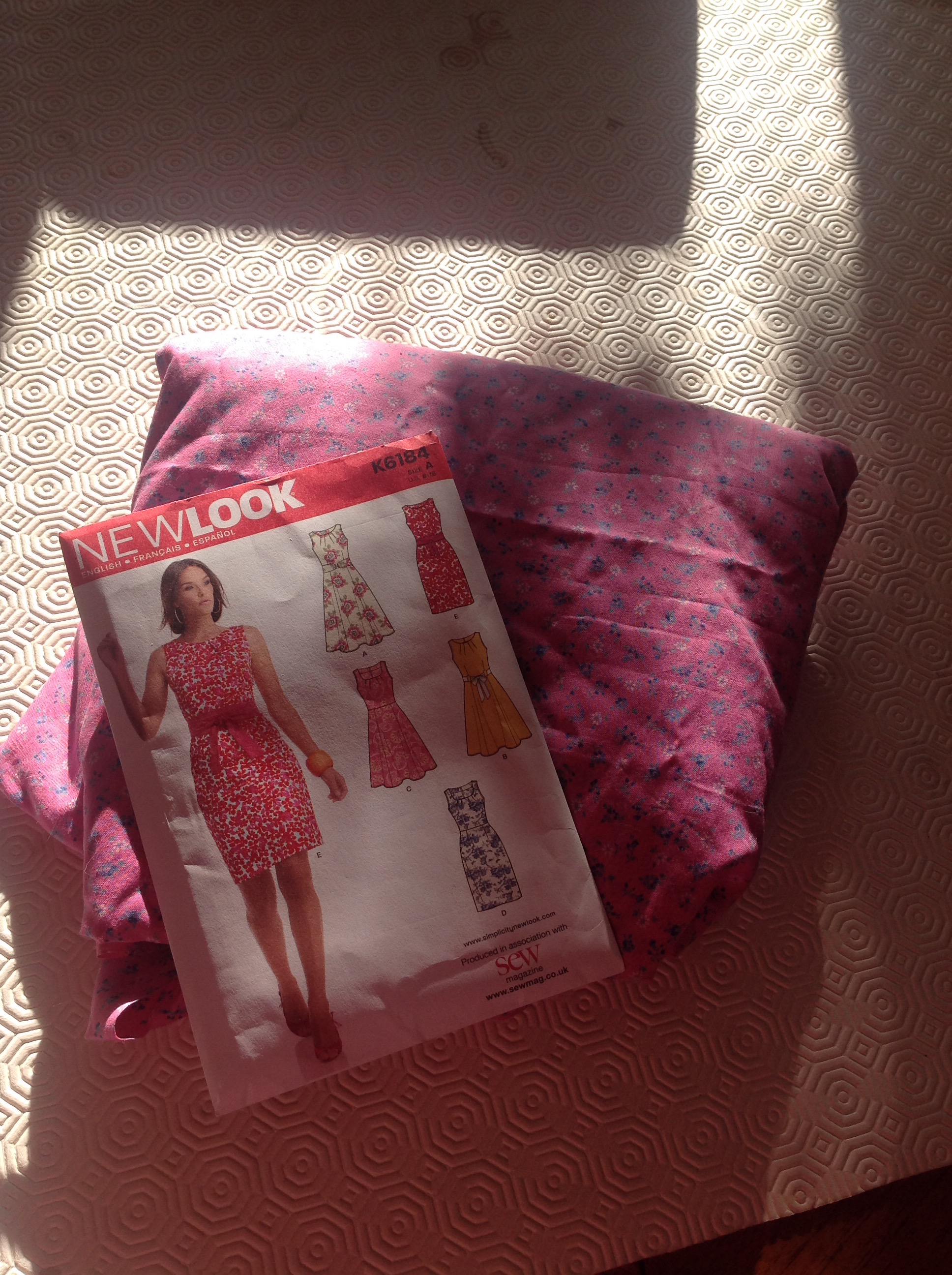
Over a year ago, I was browsing the craft magazines in WHSmiths (as you do) and in amongst the jewellery-making and patchwork magazines I occasionally treat myself to, I spotted something on the cover of one of the sewing magazines. A dress, one that I’d actually wear. Turns out the dress in question was the free pattern with that edition of Sew Magazine.

The pattern and the fabric i used

The pattern and the fabric I used


Having toyed with the idea of starting to sew – I decided this could be where I start. So I bought it.

I then proceeded to stare at it for quite a while. I read the magazine article and thought – OK, that may as well be written in Greek. It made no sense to me whatsoever. And that was before I even looked at the pattern. Time for some expert help. So next time I went to my parents’, I took it with me.

After looking at the pattern, Mum very confidently told me, “You can make this.” (I’m glad one of us was sure about that). As we’re discussing what sort of fabric I should buy to actually make the dress, she mutters “I may have something…” and vanishes upstairs. She came back down with her arms full of pink floral fabric.

Pink flowery fabric

A close up of the fabric


Turns out she bought this in the 80s and never used it all. It was probably bought with me in mind anyway as she really doesn’t do pink (except for the odd hen do)… So she’s generously donated it to my trial run. (She’s still got masses left so it may reappear in a future project).

After a bit of discussion, she decided version E would be the best one for me to start off with – a straight skirt, pleated neckline and contrast tie-belt.

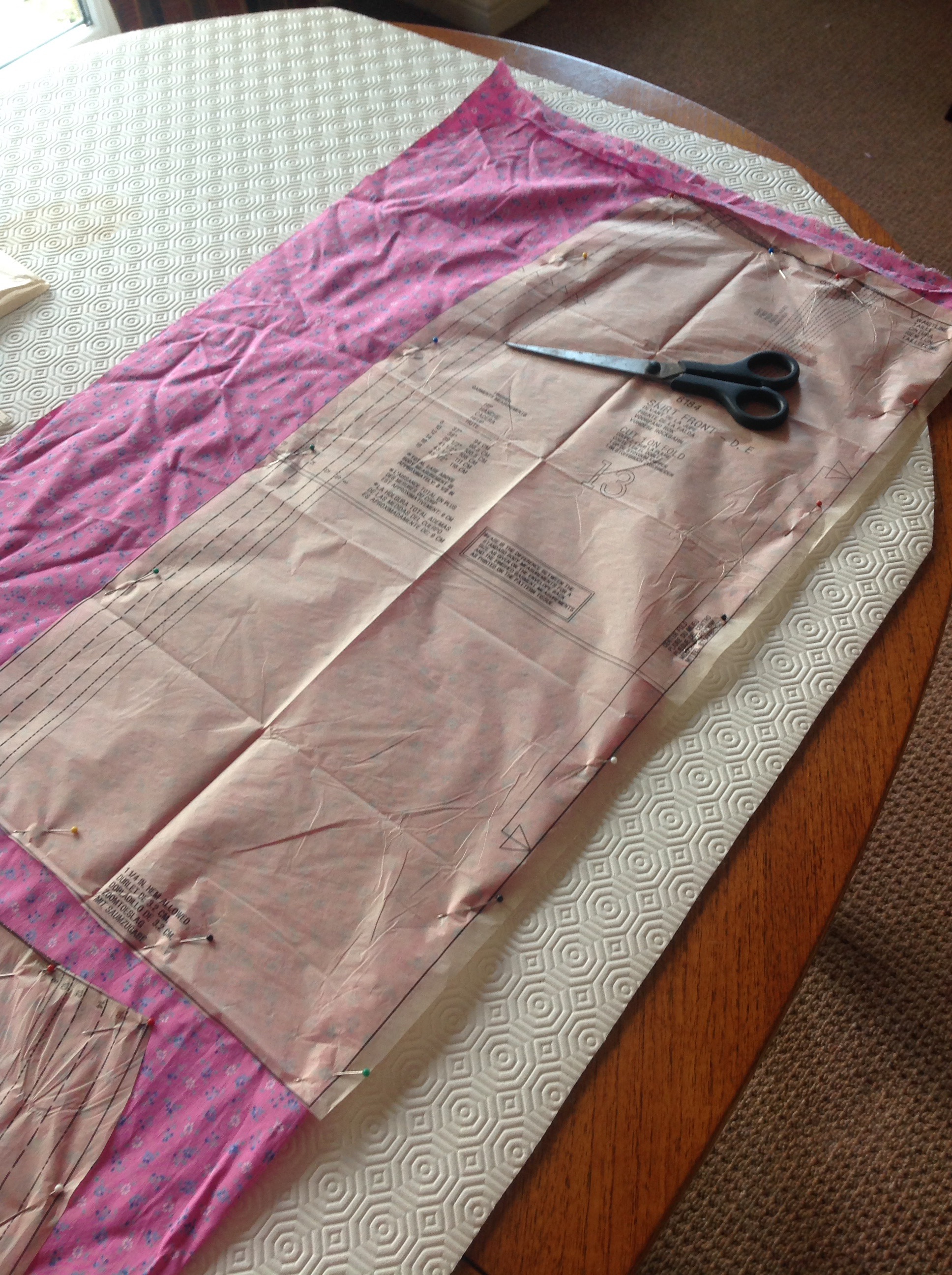
I never realised how complicated cutting out a pattern was. There was so much to bear in mind – the grain of the fabric, where the fold should be, the right and wrong side of the fabric… I hadn’t realised how important those little diagrams were that show you where to put each pattern piece – now I know better.

Cutting out

Cutting out


Once I’d got everything cut out, I discovered I needed to transfer all these little marks from the paper to the fabric.How do people do this exactly? It’s like trying to trace something only you need to draw on the bottom piece of paper. Thank god she introduced me to tailor tacks – live savers!

All of this took up most of an afternoon, at the end of which I packed everything up again and headed home. it stayed packed up for quite a while.

Eventually I gritted my teeth and got it back out again. Looked at it, read the instructions and decided I didn’t want to do this on my own.

So – back up to my parents, taking all my pattern pieces and my sewing machine. (For those who don’t know, my parents live two hours away, so I can’t just pop round in an evening…)

After reminding (telling) me how to set up and thread my machine, we got started. As my mother’s machine is merrily whirring away (making new covers for my armchair – thank you Mum!), I very slowly, and almost reluctantly, put two darts in the front bodice of my dress. One of them took a couple of attempts to get right, but I did it!

Beginning to feel confident, I then started on the pleats at the neck. This took a while as I had to redo all the dotted lines (did I mention I hate chalk pencils?). However, I now have a pleated neckline. It’s starting to look like it could one day become a piece of clothing.

Deciding I had the hang of it, I moved on to putting darts into the back of the bodice. Meanwhile my mother was looking at my instructions and decided to make a few comments…

So I’m now doing things in a slightly different order, but I’ve been assured this will make adding the zip much easier – if I ever get that far.

My next job on the dress is to start working on the skirt and actually putting pieces together. I’ll let you know how it goes…

Knickers and Negligées

It’s lingerie week on the Great British Sewing Bee. This week the sewers are dealing with delicate fabrics and first up is stretch lace bras.

I can’t imagine sewing your own bra – although I guess it could be handy. I have a few friends who struggle to get bras that fit properly. I’ve had more than one BBQ conversation about the difficulties of finding the right bra (how expensive they are when you find them). When I saw what the sewers were making I thought “maybe I could do this for people…” Having watched this challenge – so not happening!

I love lace but sewing with it? It so delicate and fiddly, adding stretch to that? No thank you. I need to get a lot more experience under my belt before I try anything this complicated.

I think the boys may be at a disadvantage this week. I suspect lingerie isn’t going to be something they’ve made for themselves in the past. Or I could be wrong – maybe they have…

We’re starting to see a bit more of the sewers now They’ve started to settle in.

Tracey’s definitely growing on me this week. I don’t always agree with her taste (that horrific blue top with the lace curtain from week one has stuck with me) but I love her attitude and some of things she’ll say. At some point I’ll figure out who she reminds me of.

Josh is just endearingly honest. Not many blokes would have so openly admitted how little attention they pay to bras. The last few weeks he’s just scraped through, let’s hope he starts to pick up a bit.

Angelline’s been a bit mixed. She seems to do amazing at the things she wants to sew but on this challenge the picot elastic really scuppered her. Wasting all that time unpicking meant she was the only one not to finish her bra. I thought the judges were surprisingly mild given it was held onto the mannequin with pins. Can you imagine Paul Hollywood being that nice to a baker who ran out of time to ice their cake?

Jade’s bra had a few issues too – slightly lopsided and the back looked a bit of a mess. 

Everyone else seemed to do quite well on this challenge, the odd twisted strap aside. The main issues seemed to be with straps and any gathering or pleating they had to do to get it to fit together. Joyce’s did look perfect though.

On to alterations. We saw slightly more variation this week. Maybe they’re starting to get a bit more confident in chopping up items of clothing.

My favourites in this challenge were Angelline’s and Tracey’s camisoles (after dissing Tracey’s taste a few minutes ago). Rumana’s twisted top was an interesting idea but didn’t really work in practice. I’m not entirely sure what Josh was trying to make, but then I’m not sure even he knew. Jamie didn’t have a good challenge either. If his first waistband had fit, it wouldn’t have been so bad, but the stirring elastic really didn’t work. Not up to your usual standard Jamie!

For our final challenge – made to measure luxury robes. I love the made to measure challenges, you really get to see part of the sewers’ personalities. Plus they always make beautiful garments.

So far I’ve loved Angelline’s made to measure items. I want both the skirt from week one and an adult version of that cape. This week she’s done it again – that red robe with the lace and billowing sleeves is just gorgeous.

Jamie, Jamie, Jamie… That robe could have been great, but I think time was just against him (and that fabric). He just tried to do too much and then everything started to go wrong.

Other than Angelline’s, my favourites from this challenge were Jade’s (I agree with Esme on the fabric), Rumana’s and Josh’s. I think he saved himself again with the final challenge. 

For the first time Angelline’s didn’t win garment of the week. I wasn’t surprised Charlotte won, she put so much work into finishing everything perfectly. And the end result was stunning.

No more Jamie! I never saw that coming, I thought he’d be in the final. He took it really well though, he knew he’d had a nightmare week and sometimes that’s all that it takes.

So three down, seven left to sew again. Next week the sewers go international (and apparently Claudia auditions for the Marvel Cinematic Universe). This could be interesting…

P.S. Sewing Top Trumps needs to be a thing!

Summary of week three:

  • Thing’s I’ve learnt:
    • That’s what picot is!
    • Always, always read the pattern
  • New projects to add to the list:
    • Angelline’s dressing gown

Dressmaking or Designing?

In my first post, I mentioned that I recently signed up to a dressmaking course. Over the years I’ve done a few evening courses: creative writing, Italian and even one certificate in modern European history (200 years in 20 weeks – baptism of fire anyone?). This time, I thought I’d go for something a bit more practical.

The course I went with is run by the local council – two hours a week for ten weeks. As I wanted to start sewing anyway, I thought it would be good to have someone keeping an eye on me while I started. I thought we’d go over how to thread and use a machine, then work our way through a few basic projects – making a simple top, maybe an a-line skirt, that sort of thing. Sound logical?

Well apparently not. This course is so much more. We didn’t even touch the machines the first week. Instead we talked about how to measure and cut different necklines. Apparently there are standard measurements for these things – who knew?

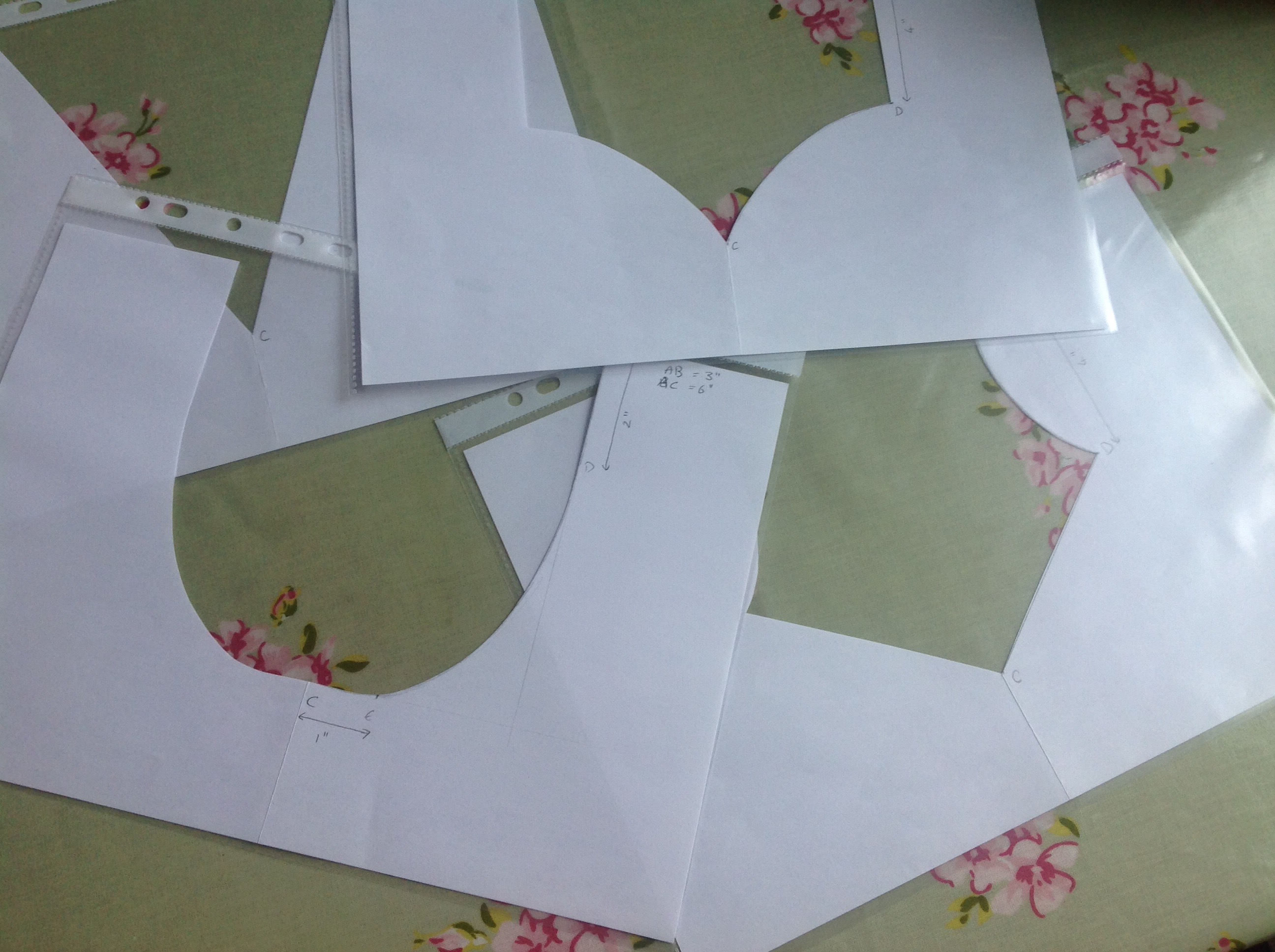
So I now have a range of necklines cut out on paper (with the measurements marked) as a reference guide.

A selection of necklines, including v-neck and round necklines

A selection of necklines, including v-neck and round necklines


Turns out we’re not just going to learn how to sew a garment from a pattern, we’re learning how to design garments as well!

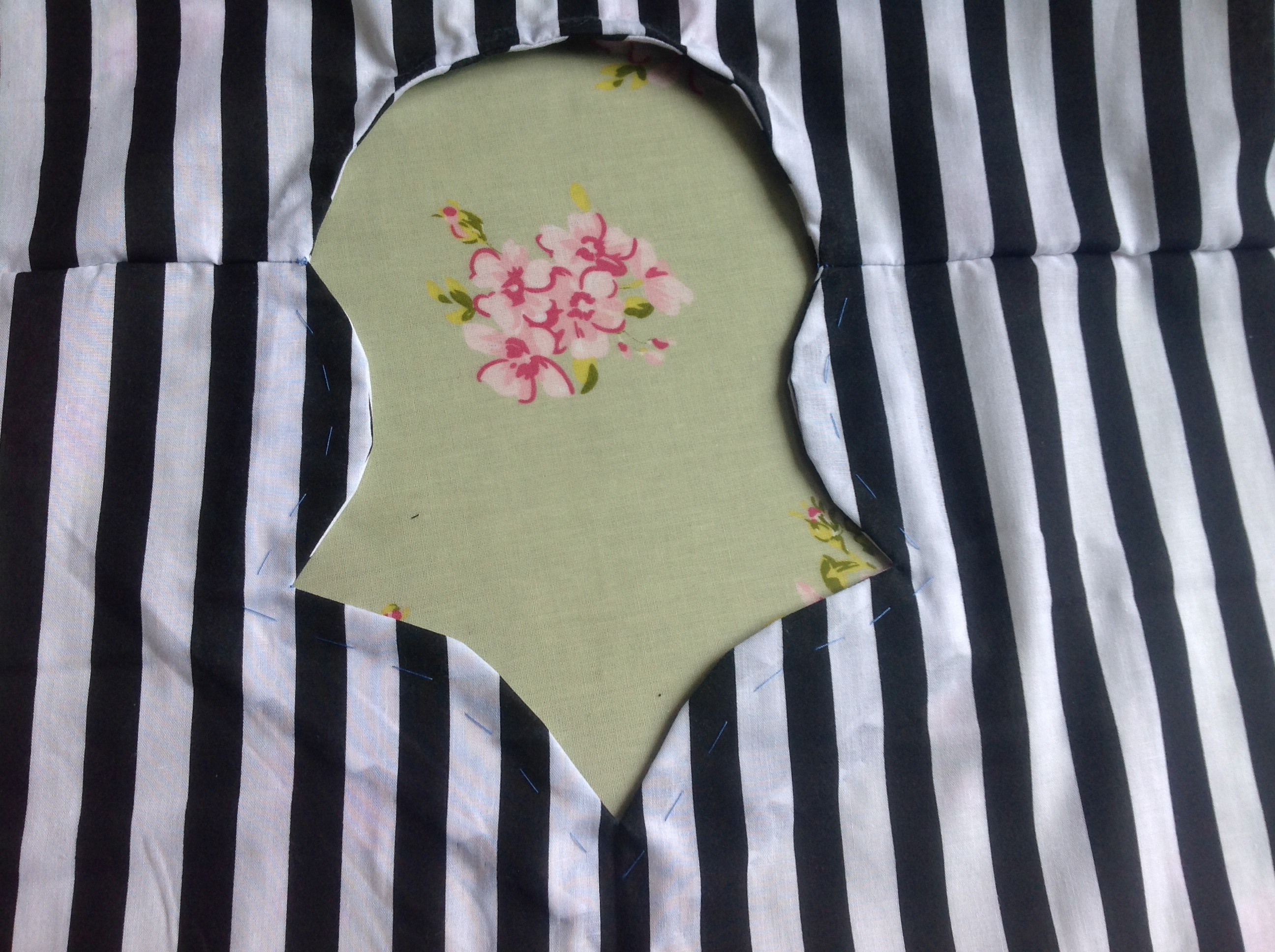
Over the last few weeks we’ve been working on a sample – learning and practising the techniques we’ll use when we create a real garment. Here’s my sample so far:

My sample so far showing the front and back necklines

My sample so far

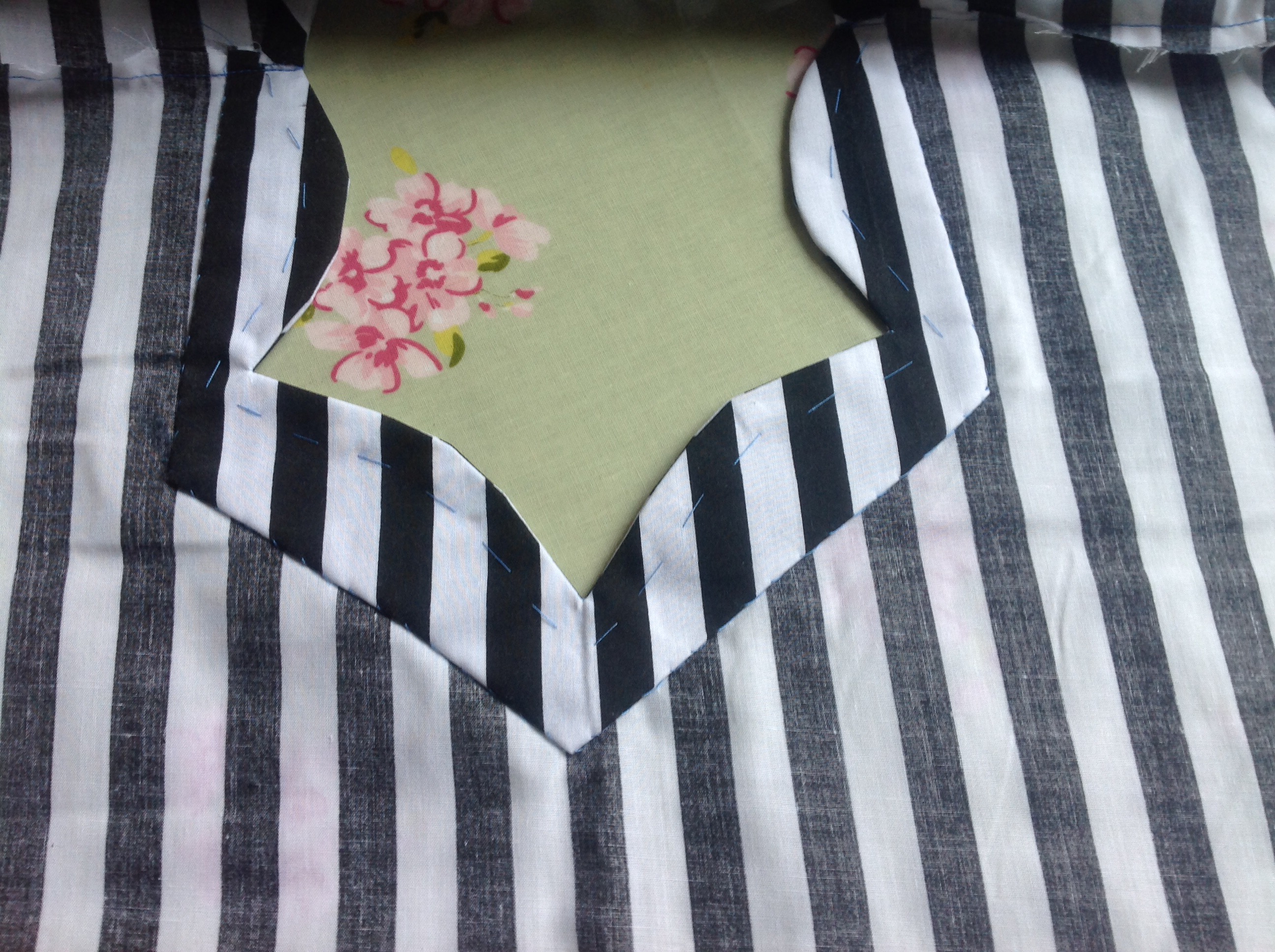
The reverse of my front neckline showing the facing

The reverse of my front neckline


So far we’ve covered:

  • Cutting the front neckline
  • Using iron-on interfacing
  • Sewing on the facing and turning out the neckline
  • Tacking and then blind hemming the neckline
  • Cutting the back neckline
  • Sewing the front and back together
  • Making our own bias binding
  • Sewing on the bias binding

It’s only been five weeks!

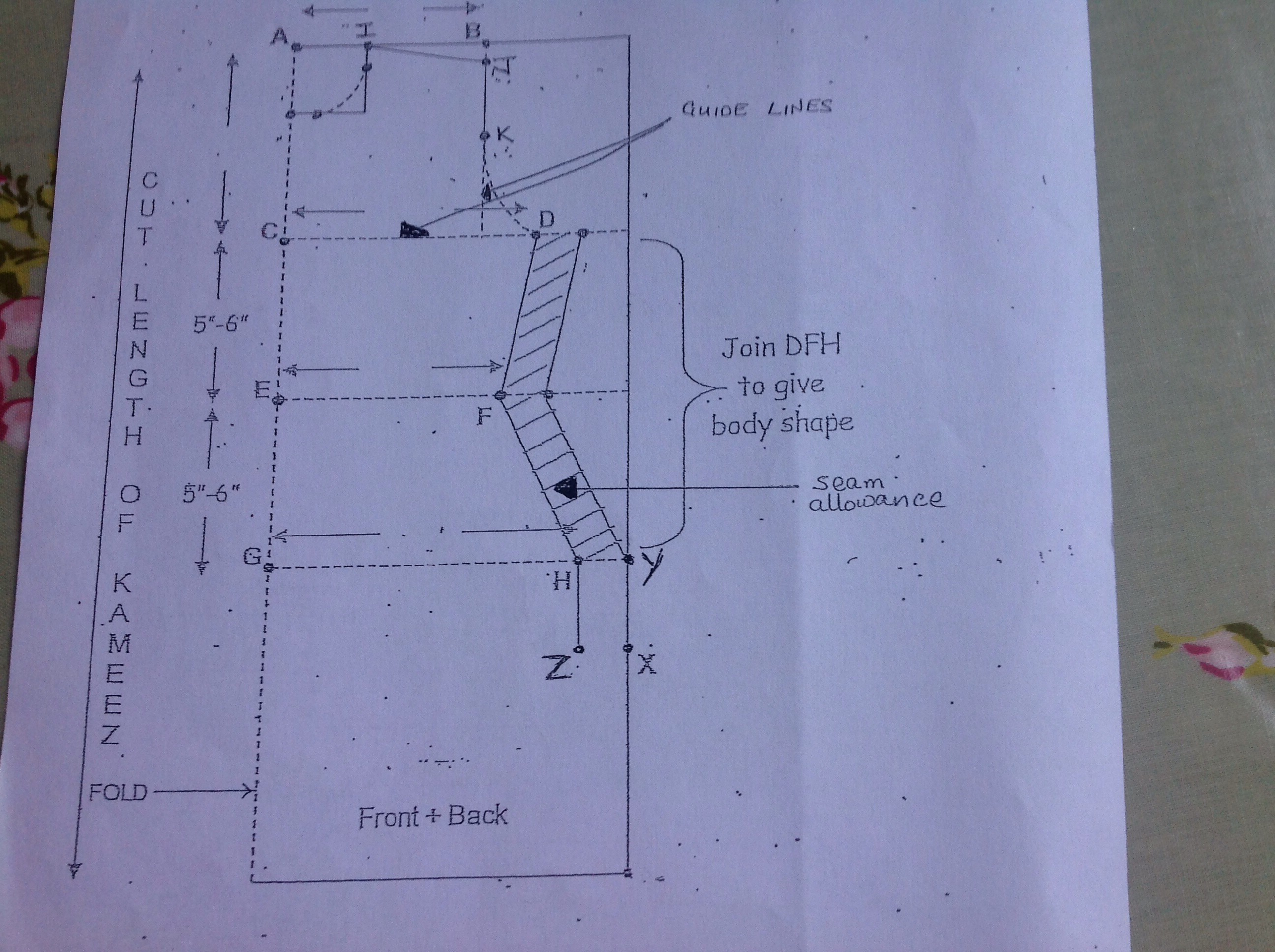
This week we did taking measurements and started on sleeves. Rather than measuring ourselves, we had to bring in a dress or top and take measurements from that. These then translate to a rather bewildering diagram for the sleeves. This make sense to anyone?

diagram for cutting out sleeves with lots of letters

Diagram for cutting out sleeves

Not entirely sure how this will become an actual sleeve – but I guess we’ll see.

It may have only been five weeks, but I feel like I’ve learnt so much already. I’m fairly confident now at threading the machine (even if the ones in class are different to mine). I’m also getting better at my foot control, even if my stitching isn’t always as straight as it could be.

As it’s a mixed class, I can see how much progress has been made by those who started just a term before me. They’re now drawing sketches of what they want to make and the tutor talks them through how to make it a reality.

I still feel like a raw beginner most of the time, but I’m beginning to see a light at the end of the tunnel. What I’ve sewn so far may not be perfect, but given how far I’ve come already I’m excited to see what a difference five more weeks will make. 

And who knows, maybe one day I’ll be one of those who can design her own patterns as well as sewing from them. Now there’s something to aim for…

Here Goes Nothing…

For over a year I’ve been talking about starting a blog. Well I’ve finally bitten the bullet and here it is – my first post on Stitches ‘n’ Scribbles.

I’ve always been slightly scared of sewing machines. Not just cautious or wary – literally scared. Personally I think it’s quite valid. The only time I ever used my mother’s machine unsupervised, it fired needles at me. Well technically it only fired one, and even even then it was just the tip – but it did end up in the top of my right arm…

So I’ve avoided them ever since and left the sewing to Mum. I’ve helped cut out and pin as she’s made curtains and covered sofas, either for me or my brothers. I even watched – secretly enviously – as she made four bridesmaid dresses for my cousin’s wedding.

The whole idea of making your own clothes seems somehow incredible. You take a pile of fabric, cut out some seemingly random shapes (using what always looks like school tracing paper) and somehow it all come together to make skirts, dresses, jackets – anything you want. It’s like magic. And as for the people who can make their own patterns… Don’t get me started.

But that’s all going to change. After she treated herself to a new machine (while making the aforementioned bridesmaid dresses), I’ve inherited my mum’s old sewing machine. Yes – the one that fired the needle… Growing up I saw this machine create endless pairs of curtains, dresses and a particularly memorable pair of culottes. Hopefully it has many more dresses in it.

So I have a pattern, the fabric’s all cut out ready and, under careful supervision and with lots of advice, I’m going to make my first dress. I’ll use this blog to record my successes – and probably failures – along the way.

I’ve also signed up to an evening course in dressmaking (I figure it can’t hurt), so I’ll be telling you all about that as well.

There’ll probably be a few side trips here and there (hence the ‘Scribbles’ part) – so stick with me and let’s see how I go.